

A Love Letter
Angela Carter's wellspring

“Do you want to go and see Bugonia?” my sister asked. No, I replied, not particularly. Yorgos Lanthimos is basically Wes Anderson to me at this point, a parody of themselves, a stylised style applied to whatever next takes his fancy. Plus I’m currently in a monogamous relationship with Angela Carter. It’s Autumn and her riches are all I crave. Her gothic beauty, linguistic artistry, the ambiguity of message and the erotic wells that she taps leave me gorged. In fact the passing daydream of Yorgos Lanthimos getting his increasingly contrived mitts on a Carter book fills me with actual horror. What an appalling thought. “If that ever happened I would dig my own grave” I say to sister.
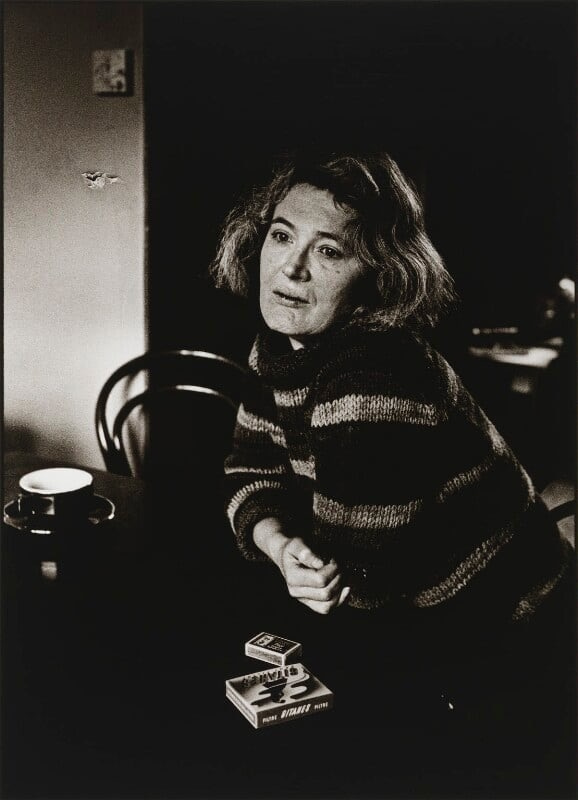
But where to start with Angela Carter? Perhaps with her and her life which was a little like that of one of her fictional women. Her suffocating relationship with her mother, who didn’t let her go to the loo on her own until she was 11. Her desire to escape this heavy maternal blanket leading to a marriage at 20, to an industrial chemist called Paul Carter, “somebody who would go to Godard movies with me and on CND marches and even have sexual intercourse with me, although he insisted we should be engaged first” she later said. They moved to Bristol where he worked and she went to uni and began writing fiction. She won the Somerset Maugham Award for her third novel, Several Perceptions and took home £500. She used this prizemoney to travel with Paul to America but, sensing she had outgrown Paul and their relationship, they broke up somewhere in Texas. Paul flew home and Angela used the rest of her money to continue adventuring. She arrived in Tokyo where she spent the next two years, living alone and having two relationships with younger Japanese men.
She loved 1970s Tokyo, calling it ‘the most absolutely non-boring city in the world’, writing that arriving there was ‘like going through the looking-glass and finding out what kind of milk it is that looking-glass cats drink’. Having felt so unsexy through her younger years, (she referred to herself as a ‘lumpy, butch cow, titless and broadbeamed’ and ‘a Russian female all-in wrestler’) in Tokyo she felt exoticized and hot for the first time. She found work in a hostess bar and read and read and read. The books that followed her Tokyo years lay the seeds for a feminism that saw beyond the essentialism of the second wave pioneers. Its fluidity of vision is what makes it so much more relevant today.
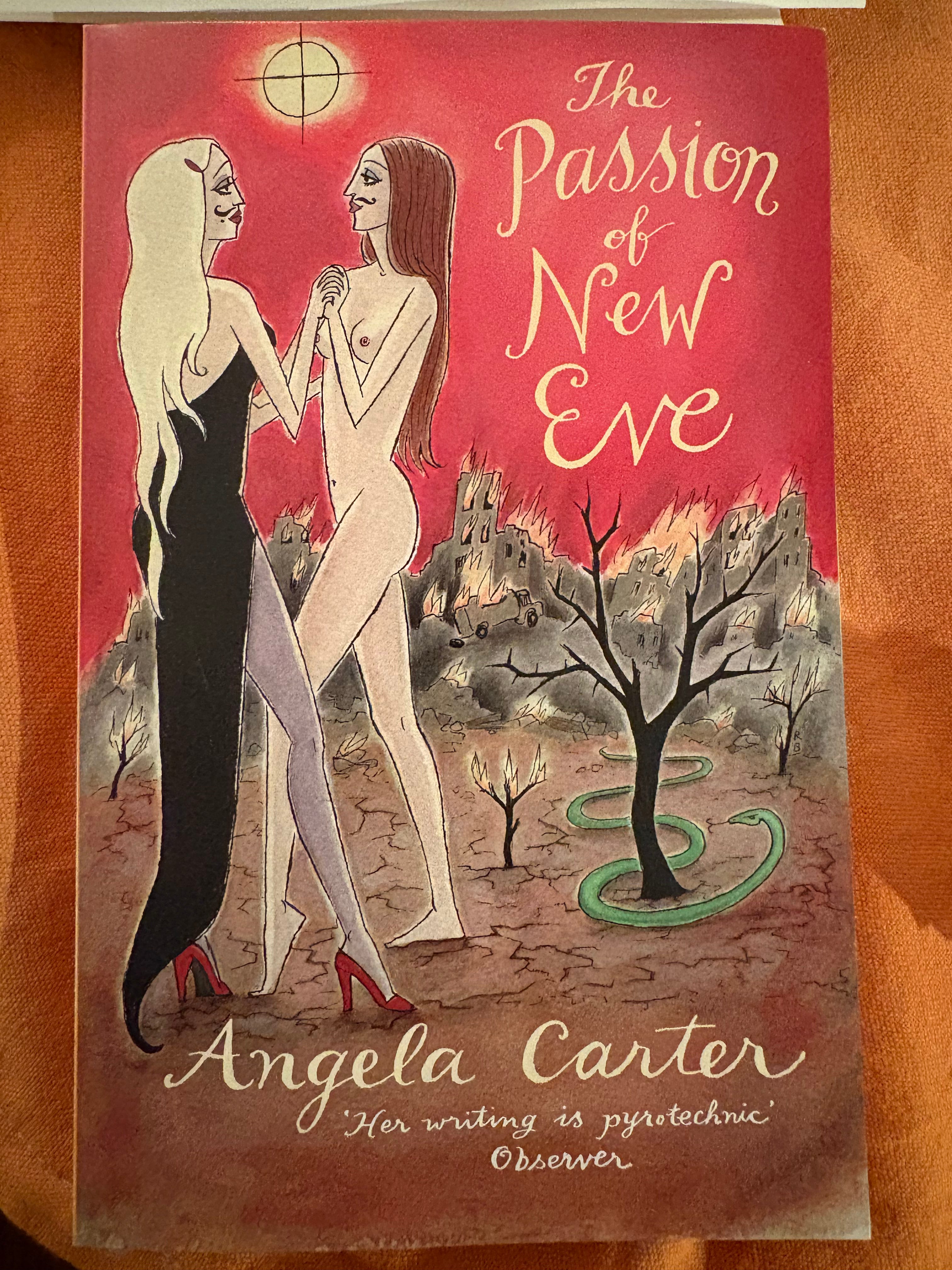
The Passion of New Eve is about a man called Evelyn who is given a forced sex change by a surgeon called Mother and a reclusive goddess called Tristessa who is in fact a man. Dworkin and Greer found this offensive and problematic. Carter then published The Sadeian Woman and the Ideology of Pornography which she had begun scheming in Japan where she had read Sade alongside Japanese porn comics. She saw Sade as liberating to women for not considering them breeders, but instead as collaborators in sexual pleasure. This was a riposte to obvious patriarchal norms. It opened with a sentence that states that sex is always a political act: ‘We do not go to bed in simple pairs: even if we choose not to refer to them, we still drag there with us the cultural impedimenta of our social class, our parents’ lives, our bank balances, our sexual and emotional expectations, our unique biographies – all the bits and pieces of our unique existences.’
Sade also informed The Bloody Chamber, many peoples entry point for Carter. I find her basic storytelling so compulsive, and it’s so natural that she would write not just specifically for children, but also use folk stories as threads in new weavings that explored the eroticism of growing up. This is The Bloody Chamber collection and its exploring of Little Red Riding Hood, Beauty and the Beast, Puss in Boots and Bluebeard (a French tale about a wealthy man who murders his wives). One of the sexiest images that recurs in Carters writing for me is around the dripping of hot wax onto bare shoulders, and that keeps finding its way into these stories.
I adore the way she writes about and describes clothing. It reminds me of everything I love about clothes, how they age and begin to tell their own stories. How they reflect us, how they project us, how they protect us. How fabric feels agains naked skin, where it scratches, where it soothes. How different people choke themselves in certain garments or pieces of jewellery. How people give or make or mend clothes for one another. The jumper that is knitted for Melanie when she is at her lowest ebb in The Magic Toyshop. The way the satin and lace feels on the narrators chest in The Bloody Chamber. How Ma Nelson repairs and tends to Fevvers’ outfits in Nights at the Circus….
Nights at the Circus was my way in to Angela Carter. I bought it, vaguely bored, passing time in a bookshop one afternoon. I had a faint idea of her, the female of that generation, the generation of Rushdie, Barnes and Amis. I have liked bits of all those men. This was something else. It was like finding myself deep in a new forest that was somehow exquisitely familiar. It was so ambiguous. She hated being called a magical realist and that makes so much sense to a dreamer like me. Life doesn’t always make sense. If there is one place the imagination should be totally rampant its in the paintings we paint, the music we record and the books we write.
In Nights… we meet Sophie Fevvers, a woman who has swan wings that unfurl when she needs them to, which is usually when she is performing having landed a job at a theatre with a production that plays on stunts. Are these wings real, as in was she actually born with them? An American journalist in London, Jack Walker tries to investigate. He also kinda falls in love. But he doesn’t really get anywhere because, we suspect, Fevvers is gay - Ma Nelson presumably her partner - and generally unpindownable. I won’t spoil any plot here, but I have yearned and lived for books which give so much and pin down so little. They are a reflection of everything I have lived and believed in my own life. I had found a kinship with someone and they could spin into fiction so many of those lessons and thoughts.
I don’t really hate Yorgos Lanthimos that much, I loved The Favourite and The Lobster, but I do feel certain tropes of his have been inspired by something radical in Carters writing, and having found her I have less patience for where his preoccupation with style over something more profound has led him.
Yes I know it’s Bugonia, autocorrect etc etc and substack have removed the edit function on mobile app where I wrote this 😡
The Passion of New Eve is one of my favourites. You’re right - ‘fluidity of vision’ hits the spot. Her stories will never die. :)